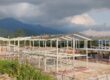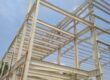
The global construction landscape is undergoing a seismic shift. The construction industry is undergoing tremendous changes and innovation is now seen more than as a future concept. The demand for LGSF structure is one of these new innovations. From housing to commercial and industries, everywhere the demand is rising.
Light Gauge Steel Frame (LGSF) construction has transitioned from a niche alternative to the primary choice for developers, architects, and government bodies worldwide. But what exactly is driving this dominance in 2026?
Dive through this comprehensive guide to explore the technical superiority, economic viability, and environmental necessity of light gauge steel frame construction and why steel structure buildings are the definitive blueprint for the modern era.
The Evolution of Building Systems
For decades, traditional brick-and-mortar and reinforced cement concrete (RCC) were the undisputed kings of the construction site. However, these methods are fraught with challenges: long gestation periods, heavy reliance on manual labor, material wastage, and a significant carbon footprint.
In 2026, the criteria for excellence in construction have changed. Speed, precision, and sustainability are now non-negotiables. This is where the LGSF structure excels. They utilize cold-formed steel profiles that allow for a high strength-to-weight ratio, enabling the creation of durable, multi-story buildings and facilities.
Why LGSF Structure is the 2026 Industry Standard
1. Unmatched Speed of Construction
Time is the most valuable currency in the modern economy. One of the primary reasons light gauge steel frame construction is dominating 2026 trends is its ability to compress project timelines by up to 60%.
The components of an LGSF building are pre-engineered to sub-millimeter precision in a controlled factory environment. Hence, the on-site process becomes an exercise in assembly rather than raw construction. Foundations can be laid while the steel frames are being fabricated, allowing for parallel processing that traditional methods cannot match. For commercial facilities and emergency housing, this rapid deployment is a game-changer.
2. Precision Engineering and Quality Control
Traditional construction is often subject to human error, weather delays, and inconsistent material quality. Steel structure buildings bypass these issues through computer-aided design (CAD) and automated manufacturing.
Every stud, track, and joist in an LGSF structure is manufactured to exact specifications. This ensures that every wall is perfectly plumb and every corner is perfectly square.
3. Sustainability
Unlike concrete, steel is a sustainable material due to its recycling qualities. LGSF is a dry construction method, hence, it requires minimal water compared to the vast amounts consumed by RCC construction.
4. Structural Resilience and Safety
As climate patterns become more unpredictable, the demand for resilient infrastructure is taking a 360 degree turn. Steel structure buildings offer superior resistance to seismic activity. The inherent ductility of steel allows the building to absorb and dissipate energy during an earthquake, making LGSF one of the safest choices for tremor-prone regions.
The inorganic nature of an LGSF structure provides an inherent layer of protection that timber or traditional materials cannot provide. It does not rot, warp, or tolerant to termites, ensuring the longevity of the facility for decades.
Technical Composition of LGSF
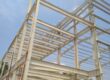
An LGSF structure is composed of structural frames made from cold-formed galvanized steel. These sections are typically C or Z shaped, allowing for high load-bearing capacity despite their lightweight nature.
- Galvanization: The steel is coated with zinc to prevent corrosion.
- Sheathing: Once the frames are erected, they are clad with high-performance boards and insulated with materials like rockwool or glass wool to provide exceptional thermal and acoustic performance.
- Versatility: The system is incredibly flexible, allowing for wide spans and creative architectural designs.
Economic Impact: The Cost-Benefit Analysis
While the initial material cost of steel might occasionally be higher than raw timber or low-grade concrete, the total cost of ownership and total project cost tells a different story in 2026.
- Reduced Labor Costs: Since the system is pre-engineered, it requires fewer laborers on-site.
- Foundation Savings: Because light gauge steel frame construction is significantly lighter than concrete, the requirements for the foundation are reduced.
- Early Occupancy: The speed of LGSF allows businesses to start operations sooner, providing a much faster Return on Investment (ROI).
Applications Dominating 2026
The versatility of steel structure buildings allows them to be used across various sectors:
- Healthcare Facilities: The need for rapid expansion of medical wings and clinics.
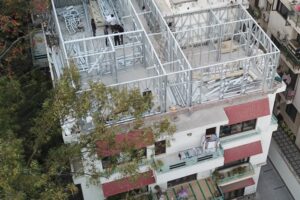
- Educational Buildings: Building new schools or adding floors to existing structures without putting excessive load on old foundations.
- Residential Complexes: From affordable housing projects to luxury villas.
- Industrial Offices: Durable, high-quality office spaces within factory premises that can be relocated or expanded if necessary.
Overcoming Traditional Myths
Even in the era of innovation, traditional myths carry on that might create confusion to choose the best. Hence, let’s clear these myths:
- Acoustics: With modern insulation techniques, steel structure buildings offer acoustic ratings that often surpass traditional brick walls.
- Thermal Comfort: LGSF allows for thick layers of high-quality insulation within the wall cavity; hence, these buildings are exceptionally energy-efficient, keeping interiors cool in summer and warm in winter.
- Durability: A common myth is that steel buildings feel flimsy. In reality, the high-strength steel used in LGSF is engineered to withstand high wind speeds and heavy snow loads, offering a sense of permanence and security.
The Need to Choose Solvabuild
In the evolving landscape of modern construction, Solvabuild stands out as the leading company. We focus on high-quality light gauge steel frame construction that align with 2026’s demands for efficiency and durability.
Our approach integrates advanced engineering with a deep understanding of structural integrity, ensuring that every LGSF structure meets the highest international standards. By operating from high-capacity manufacturing hubs, we ensure that the precision of the steel components is maintained from the design phase to the final assembly on-site.
Final Thoughts
As we look toward the remainder of the decade, the shift toward light gauge steel frame construction will only accelerate.
The combination of environmental responsibility, cost-efficiency, and breathtaking speed makes steel structure buildings the most viable solution for our growing global population. Visit Solvabuild’s official website to explore more and choose the best.
FAQs
1. What is the lifespan of an LGSF structure?
An LGSF structure is designed for longevity. The steel is galvanized (coated with zinc), hence, it is protected against rust and corrosion. These buildings might last over 50 to 70 years.
2. Can LGSF be used for multi-story buildings?
Yes, light gauge steel frame construction is ideal for multi-story buildings. It can be used for 4 or 5 stories and taller buildings to frame the higher floors.
3. Is an LGSF structure fire-resistant?
Yes, LGSF structure is fire-resistant due to its non-combustible property.
4. How does the cost of LGSF compare to traditional concrete construction?
While the raw material cost of steel may be higher, the overall project cost is often lower. This is due to a 60% reduction in construction time, lower labor costs, reduced foundation requirements, and minimal waste.
5. Is it possible to renovate or expand a facility built with LGSF?
Yes, one of the greatest advantages of light gauge steel frame construction is its flexibility. Walls can be moved, and facilities can be expanded with minimal disruption.